US and Iran Exchange Strikes: Stunning Update on Crisis


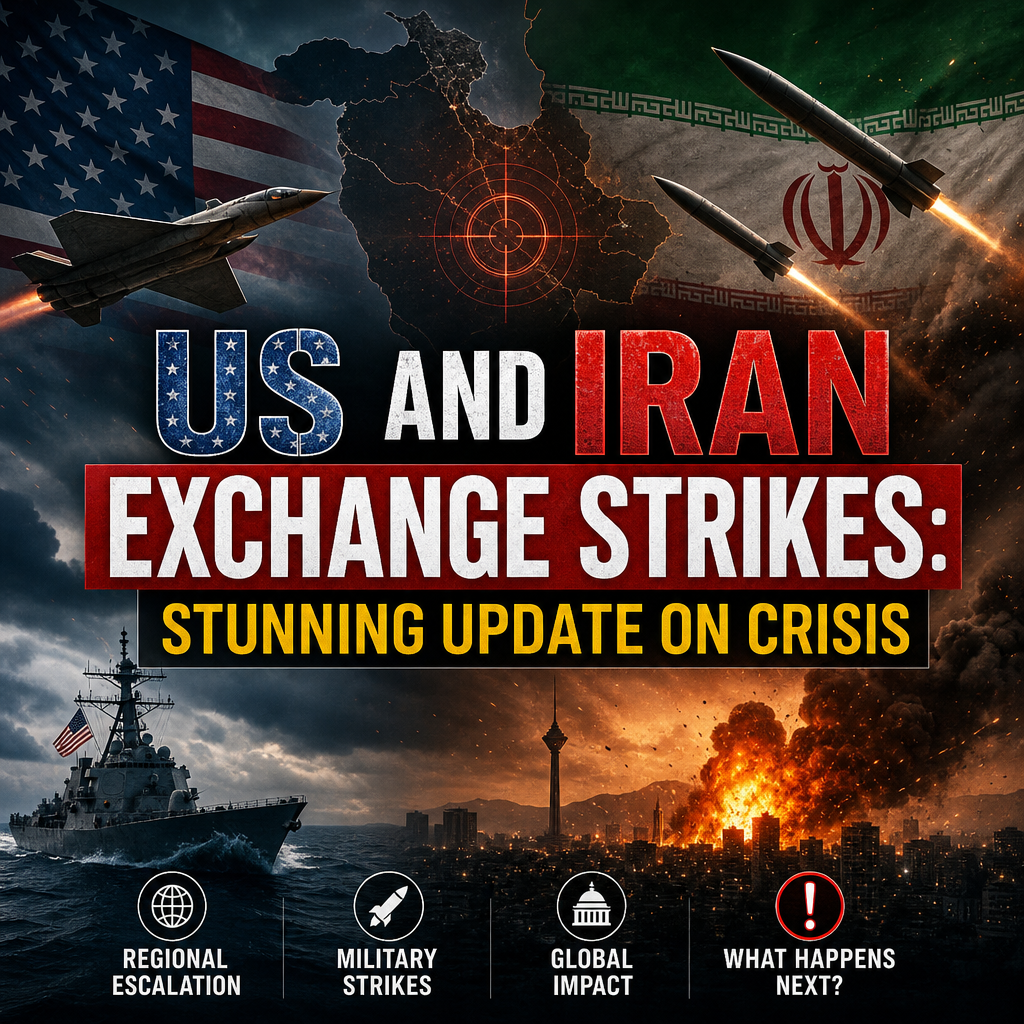
US and Iran exchange strikes has pushed an already volatile relationship into an even more dangerous phase, with each side framing its actions as retaliation, deterrence, or defense. But beyond the headline-grabbing military exchange, the more important story is how quickly the confrontation can widen, how little room remains for miscalculation, and how divided the international response still is.
What stands out across reporting from different outlets is not just the scale of the strikes, but the competing narratives surrounding them. Iranian state-aligned coverage, echoed in outlets like RT, tends to emphasize sovereignty, resistance, and the argument that Tehran is responding to pressure rather than initiating escalation. Al Jazeera has typically placed more weight on the human and regional consequences, highlighting the risk to civilians, nearby states, and fragile diplomatic channels. Sky News often approaches the crisis through the lens of security and Western policy, focusing on military capabilities, alliance commitments, and the possibility that the conflict could spill beyond its current boundaries. Taken together, those viewpoints show a crisis that is both tactical and political: each strike is also a message.



US and Iran exchange strikes: what the latest confrontation signals
The immediate concern is that exchange of fire between the two countries, or between forces aligned with them, can create a cycle that becomes harder to stop with every round. Even when leaders say they want to avoid a wider war, military action has a momentum of its own. A strike meant to deter can instead provoke a counterstrike, and a counterstrike can be interpreted as a test of resolve.
That is why analysts and regional observers are watching for three things more closely than the damage reports:




– whether either side signals a willingness to pause
– whether proxy groups in the region become more active
– whether diplomatic intermediaries can keep communication channels open
The danger is not only direct US-Iran confrontation. It is also the possibility that regional actors—armed groups, border states, naval forces, and allied militaries—are pulled into the crisis in ways that make the situation harder to contain. This is one reason many reports stress the vulnerability of shipping lanes, bases, and energy infrastructure in the wider Middle East. Even a limited exchange can affect global markets and international security planning.
Competing narratives: deterrence, retaliation, and restraint
One of the clearest takeaways from the coverage is that both Washington and Tehran are trying to control the meaning of the strikes as much as the battlefield itself. In practical terms, that means presenting their actions as proportionate and justified, while framing the other side as the aggressor.
From the Iranian perspective, force is often described as a response to external pressure, sanctions, and attacks on sovereignty. That framing resonates domestically and among audiences that view Iran as being boxed in by more powerful adversaries. RT’s treatment of such developments generally amplifies this angle, emphasizing the idea that the United States is escalating a crisis it helped create.
Western reporting, including Sky News, tends to give more prominence to the argument that Iran-backed activity has long challenged regional stability and that force may be intended to restore deterrence. That perspective often argues the US cannot simply absorb repeated attacks without responding, or it risks appearing weak to allies and opponents alike.
Al Jazeera’s coverage often sits between those poles, stressing that whatever the political rationale, the costs are borne by people who may have little control over the decisions being made. That includes civilians near strike zones, families in neighboring countries, and populations already living with economic strain and insecurity.
The truth is that all three viewpoints contain part of the picture. The US is under pressure not to look passive. Iran is under pressure not to look vulnerable. Regional actors are under pressure not to let their territory become the arena for someone else’s conflict. That is what makes the crisis so combustible: every side has incentives to stand firm, even when standing firm increases the risk.
Why the crisis remains so unpredictable
What makes this moment especially unstable is the absence of a clear off-ramp. In many conflicts, a ceasefire or backchannel can be quickly identified. Here, the lines are fuzzier. There may be no single “front,” only overlapping confrontations, covert operations, and retaliatory actions that can be denied or reinterpreted.
There are also practical reasons the situation is hard to read:
– military planners may believe limited strikes can be controlled, but escalation often ignores those assumptions
– public statements can be aimed more at domestic audiences than at de-escalation
– allies on both sides may encourage toughness even when diplomacy would be safer
That does not mean war is inevitable. It does mean optimism should be cautious. History shows that the US and Iran can step back from the edge when communication remains possible and when both sides calculate that restraint serves them better than escalation. But history also shows how easily the region can slip into longer, messier confrontations once the first exchange has happened.
The best assessment, based on the range of reporting, is that this crisis is still open-ended. Neither side appears eager for full-scale war, yet both seem committed to demonstrating resolve. That is not a stable formula. The next phase will likely depend less on official rhetoric than on whether commanders, diplomats, and regional partners can prevent a tactical exchange from becoming a strategic disaster.
For now, the world is left with a familiar but unsettling pattern: two adversaries warning each other not to escalate, even as their actions keep moving in that direction.